

St. Louis
Foreign Trade Zone #102
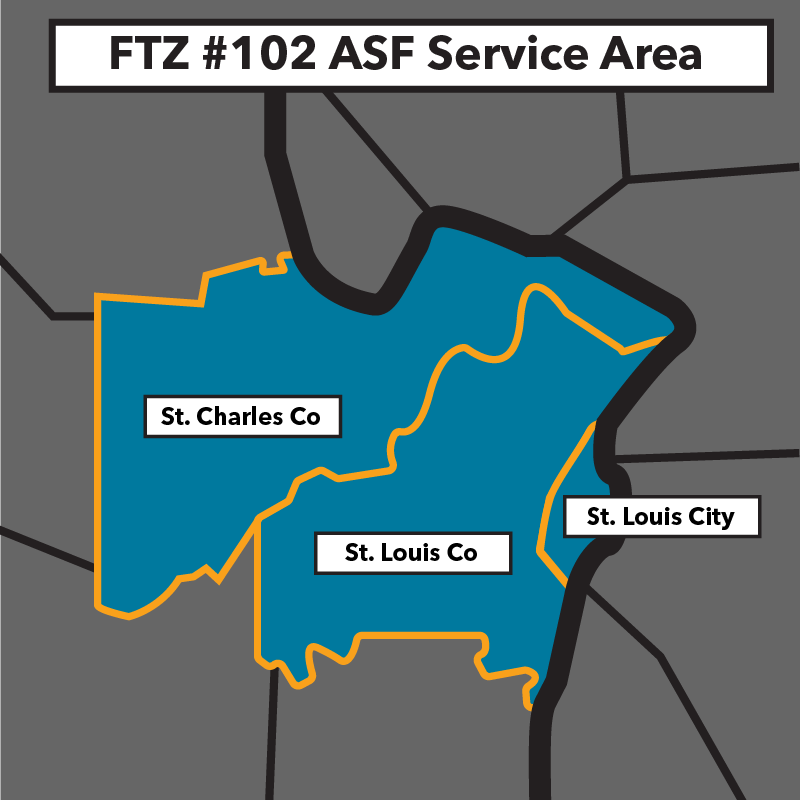
Businesses in the City of St. Louis, St. Louis County, and St. Charles County who regularly import goods may find relief from duties and tariffs by using a Foreign Trade Zone (FTZ). Products in an FTZ can receive deferred, reduced, and/or waived fees. Missouri companies not in our Alternate Site Framework (ASF) service area but near St. Louis could also be eligible and are encouraged to call and explore their eligibility.
Foreign Trade Zone
Overview
An FTZ is a secure, designated location in the United States that is considered outside U.S. customs territory for duty assessment purposes. Companies can import, store, assemble, manufacture, or manipulate goods inside an FTZ without paying customs duties until those goods formally enter U.S. commerce. Goods exported directly from the FTZ never incur U.S. customs duty.
FTZs are used by manufacturers, distributors, importers, and exporters to reduce duty exposure, improve cash flow, increase supply chain flexibility, and lower operating costs.
Foreign Trade Zone Benefits
Duty Deferral
Duties are not paid until goods enter U.S. commerce.
Duty Elimination on Exports
No duties for goods that leave the U.S. from the FTZ.
Inverted Tariff Opportunities
With approved FTZ production authority, companies may pay the duty rate on the finished good if it is lower than the rate on its components.
Improved Cash Flow
Deferring or eliminating duties helps preserve working capital.
Reduced Merchandise Processing Fees (MPF)
Weekly entry filings limit MPF payments to one per week.
No Duty on Scrap and Damaged Goods
Scrap or waste never entering U.S. commerce is not dutiable.
Operational Efficiency
Improved customs processes, inventory control, and supply chain flexibility.
Indefinite Storage
No time limits for storing foreign-status goods in an FTZ.
FTZ Benefits for
Export-Focused Companies
Companies that import goods into an FTZ and then export finished products or repackaged materials receive the strongest duty-related benefits.
Key Benefits
Common Industries Using FTZs for Exporting
FTZ Benefits for
Domestic-Focused Companies
Tariff Management
Companies that import goods primarily for sale within the U.S. use FTZs to manage duties and improve supply chain efficiency.
Key Benefits
Common Domestic-Focused Industries
All of St. Louis County and the City of St. Louis are eligible for FTZ activity. Companies should contact the World Trade Center St. Louis to learn more on how to get started.